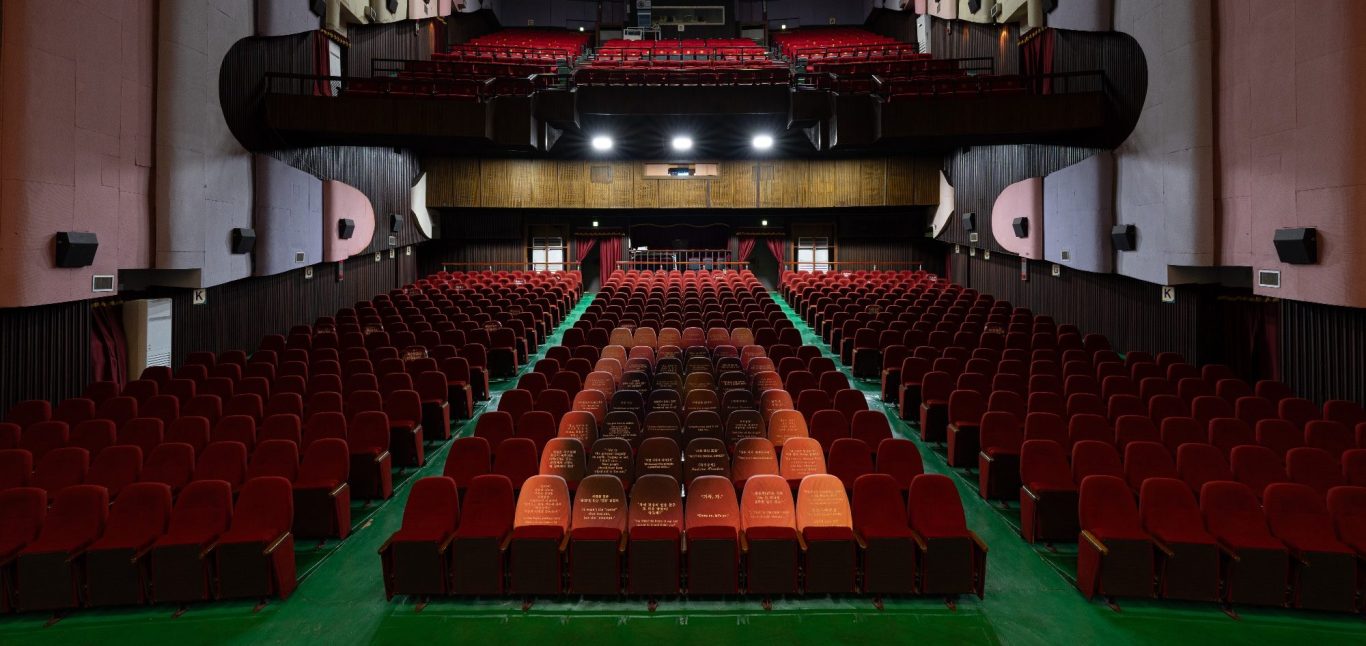
Ham Kyungah
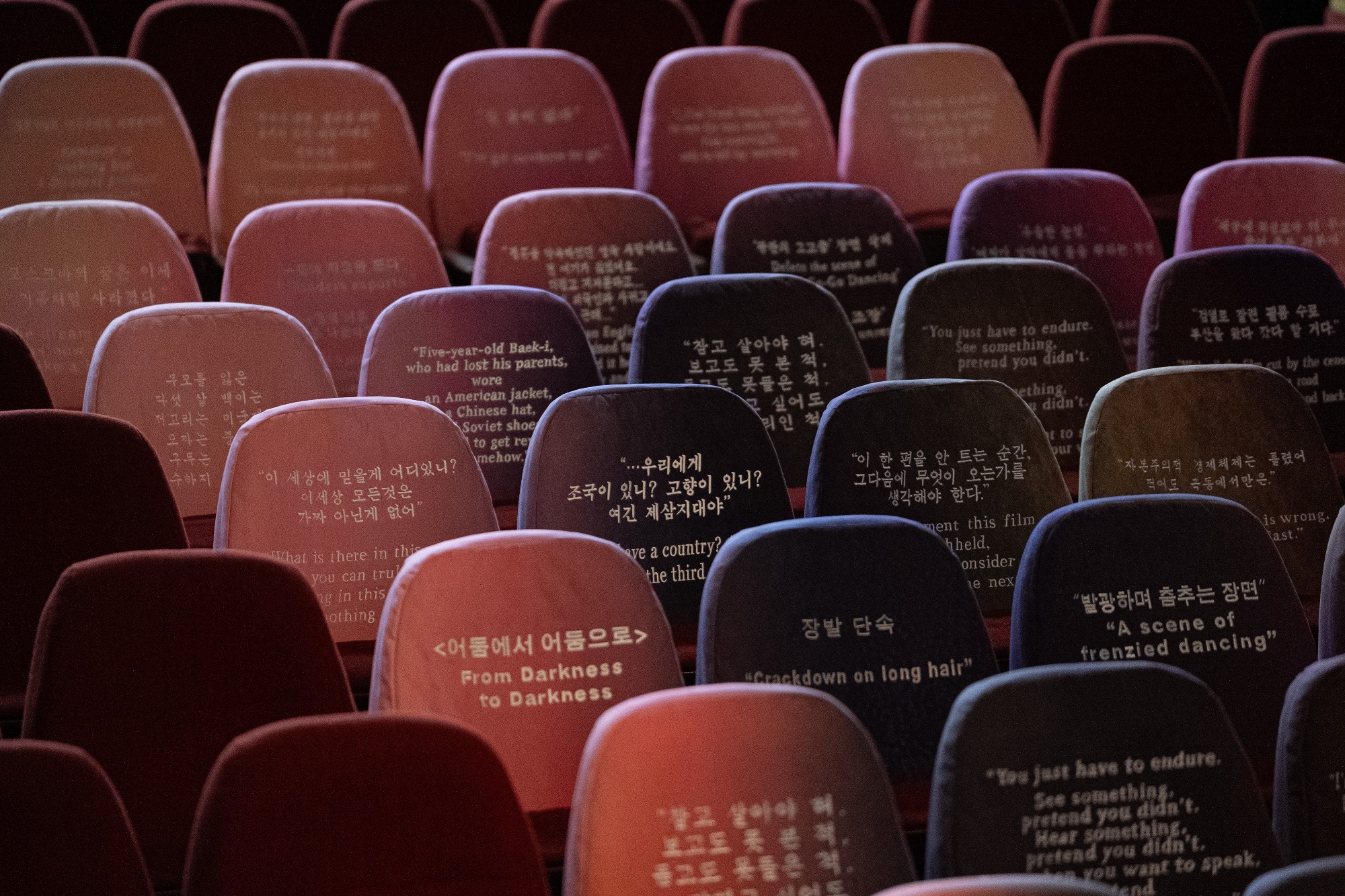
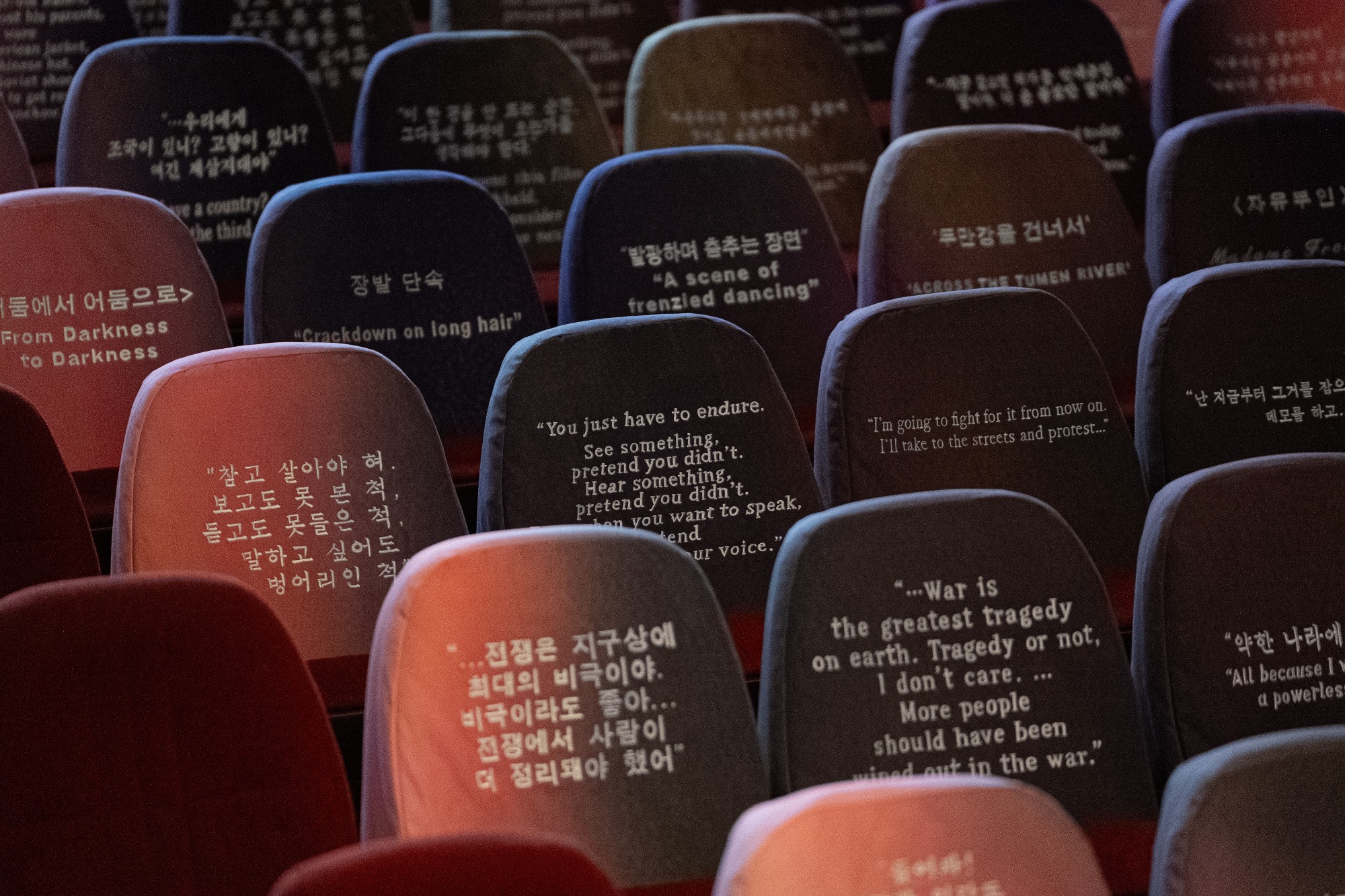
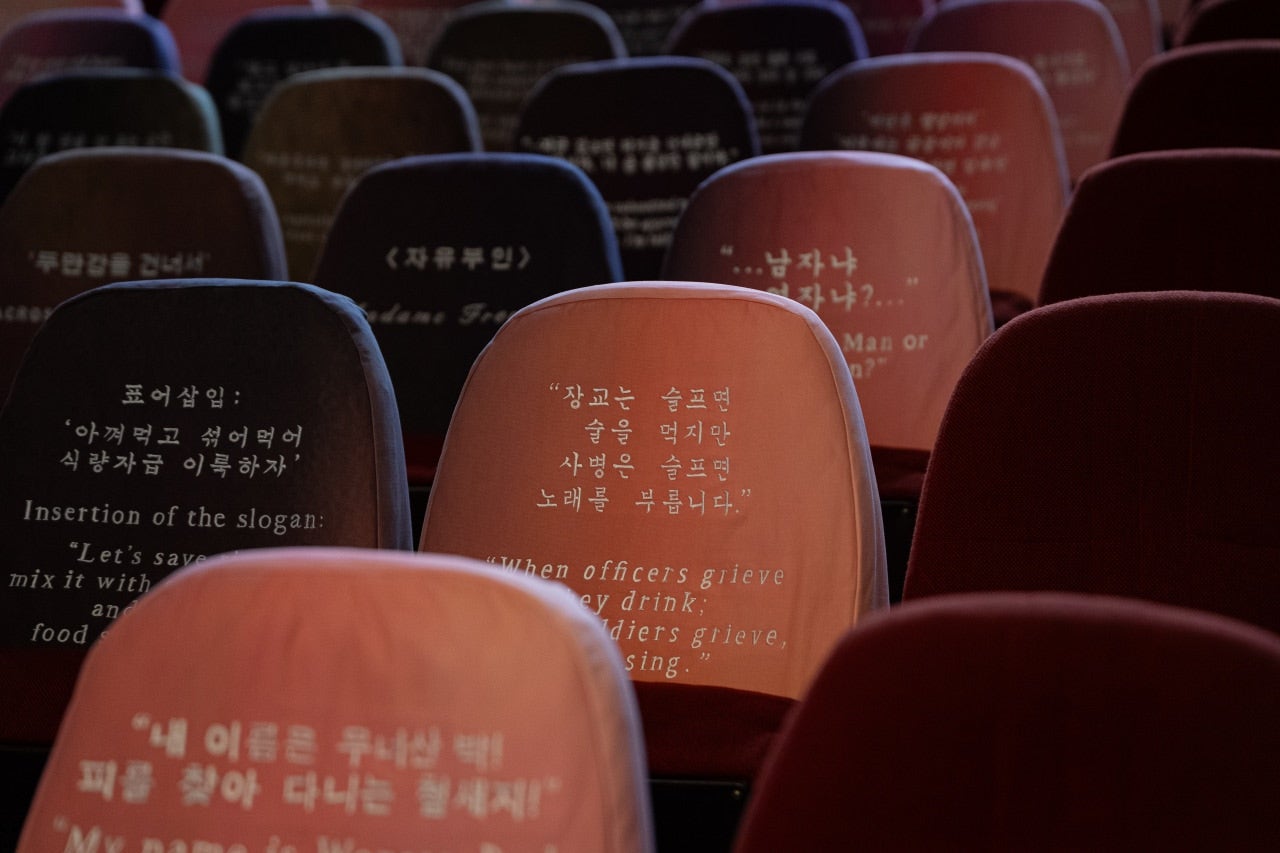
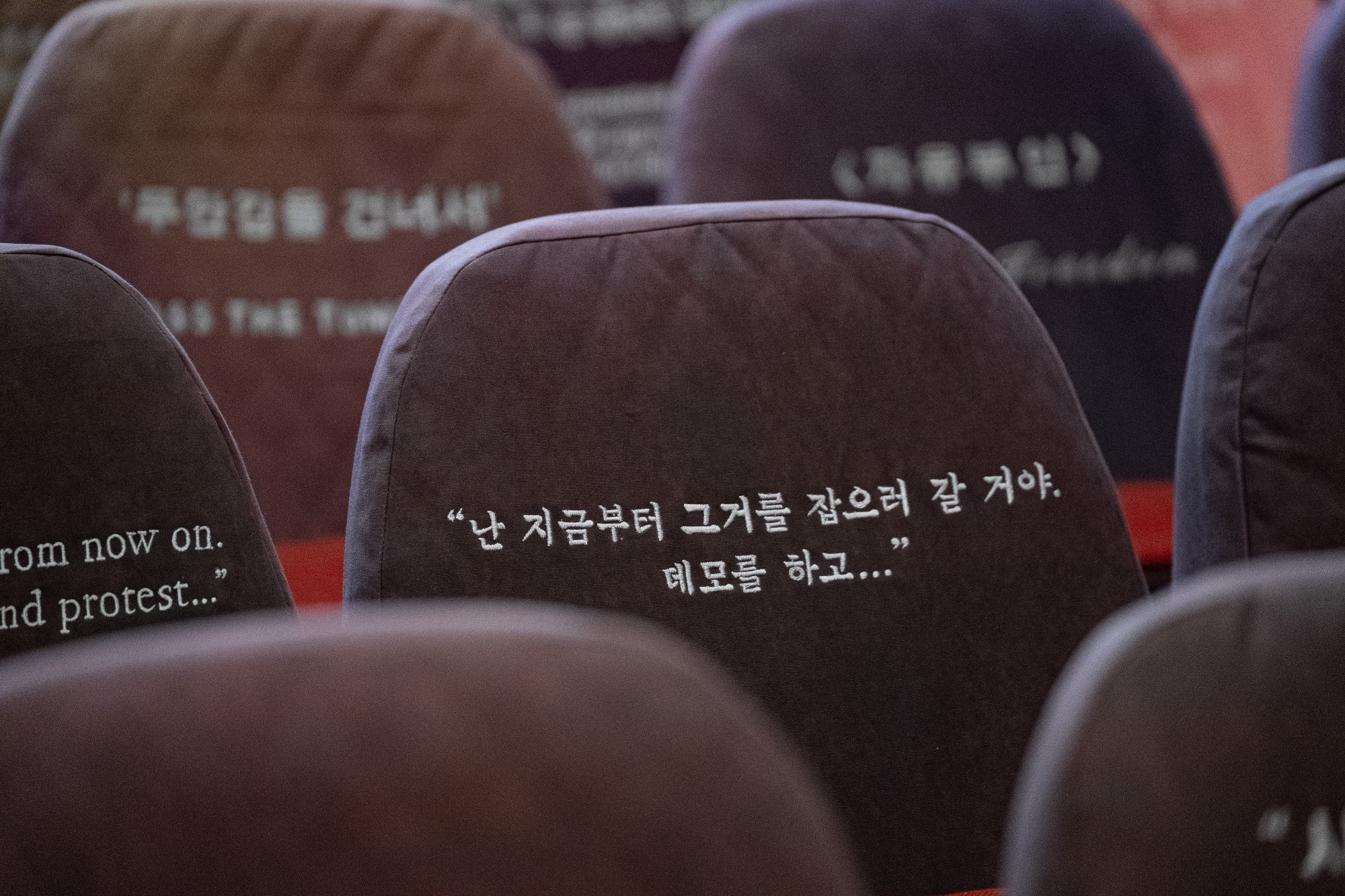
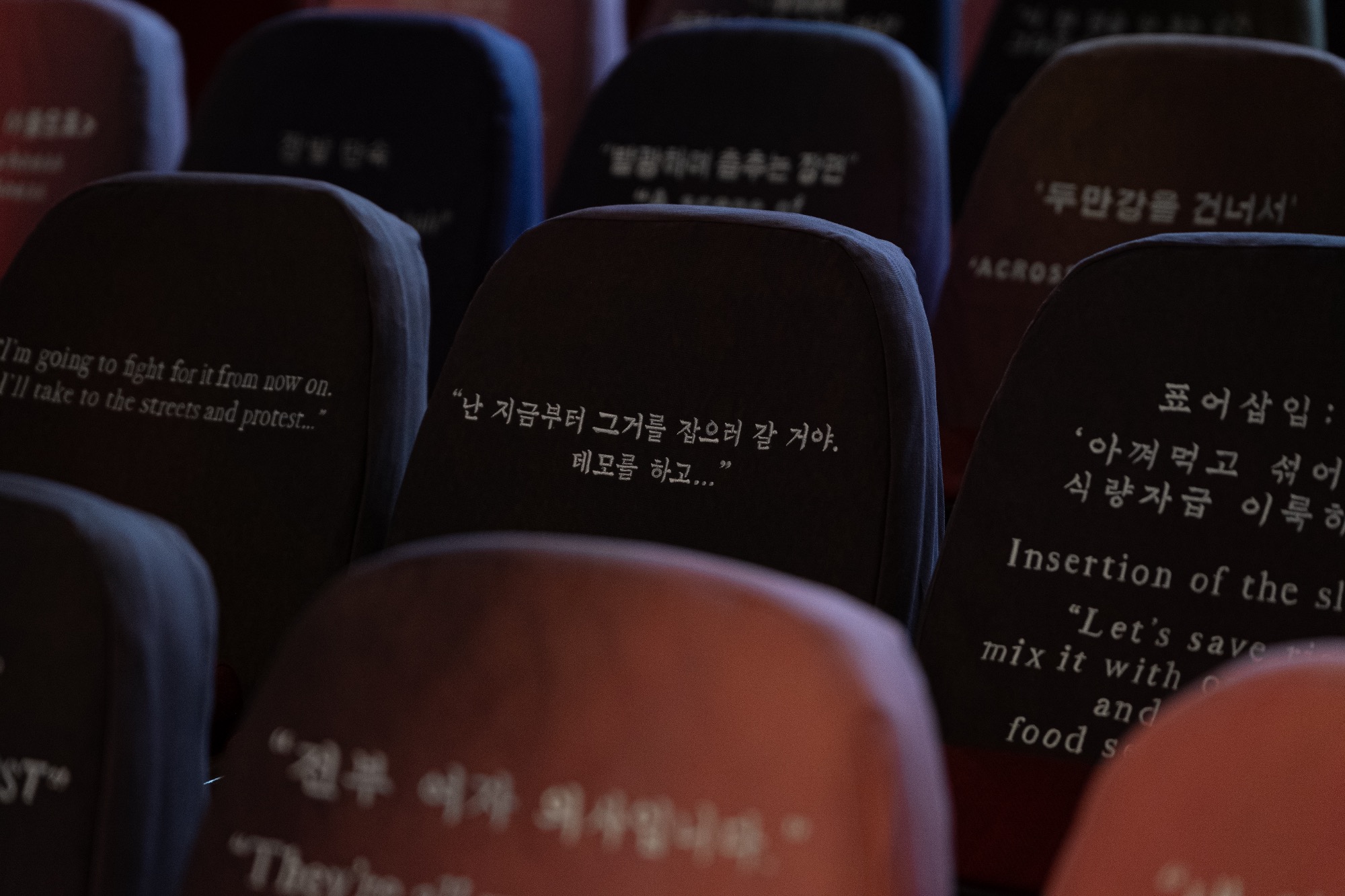
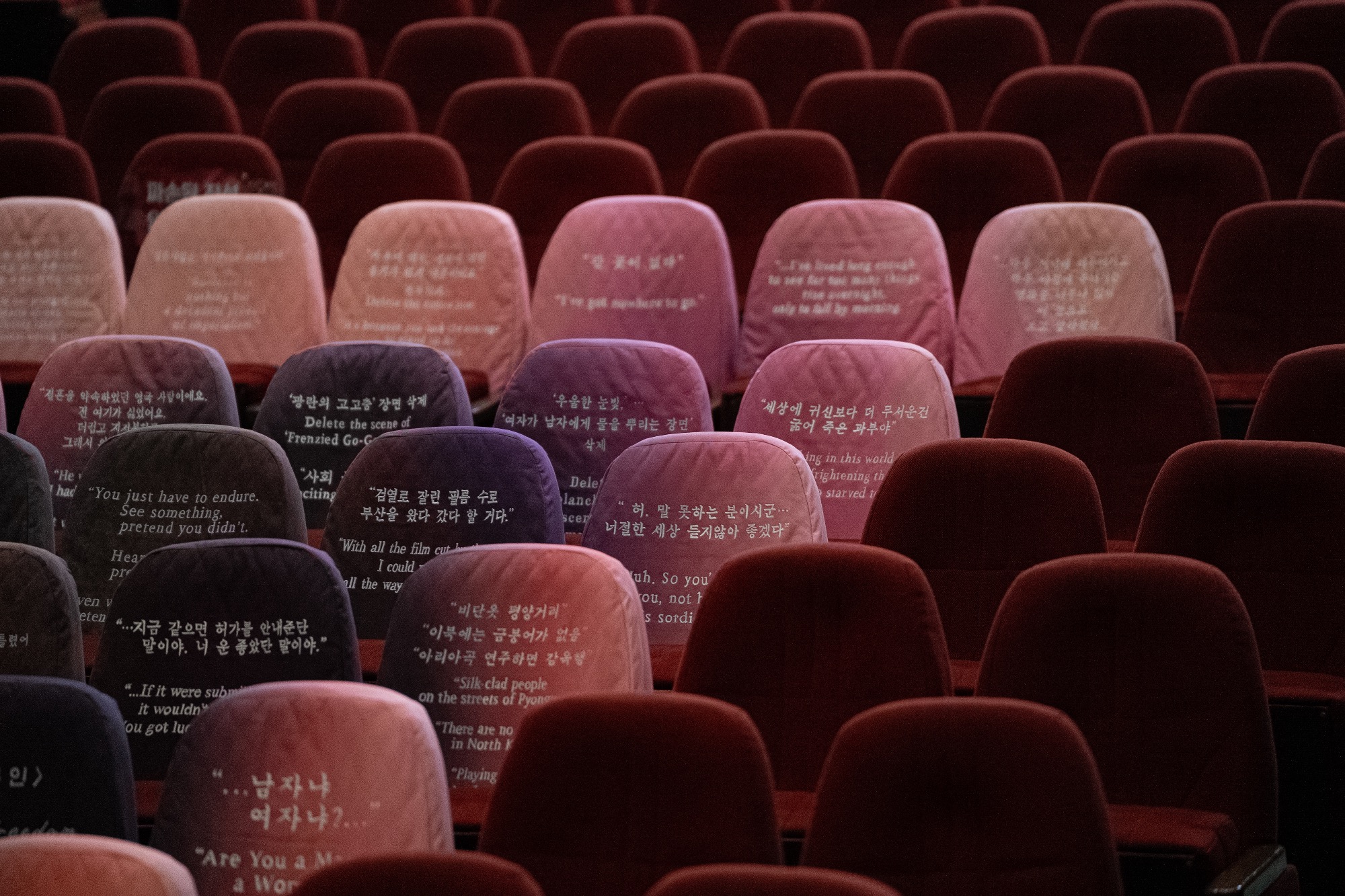
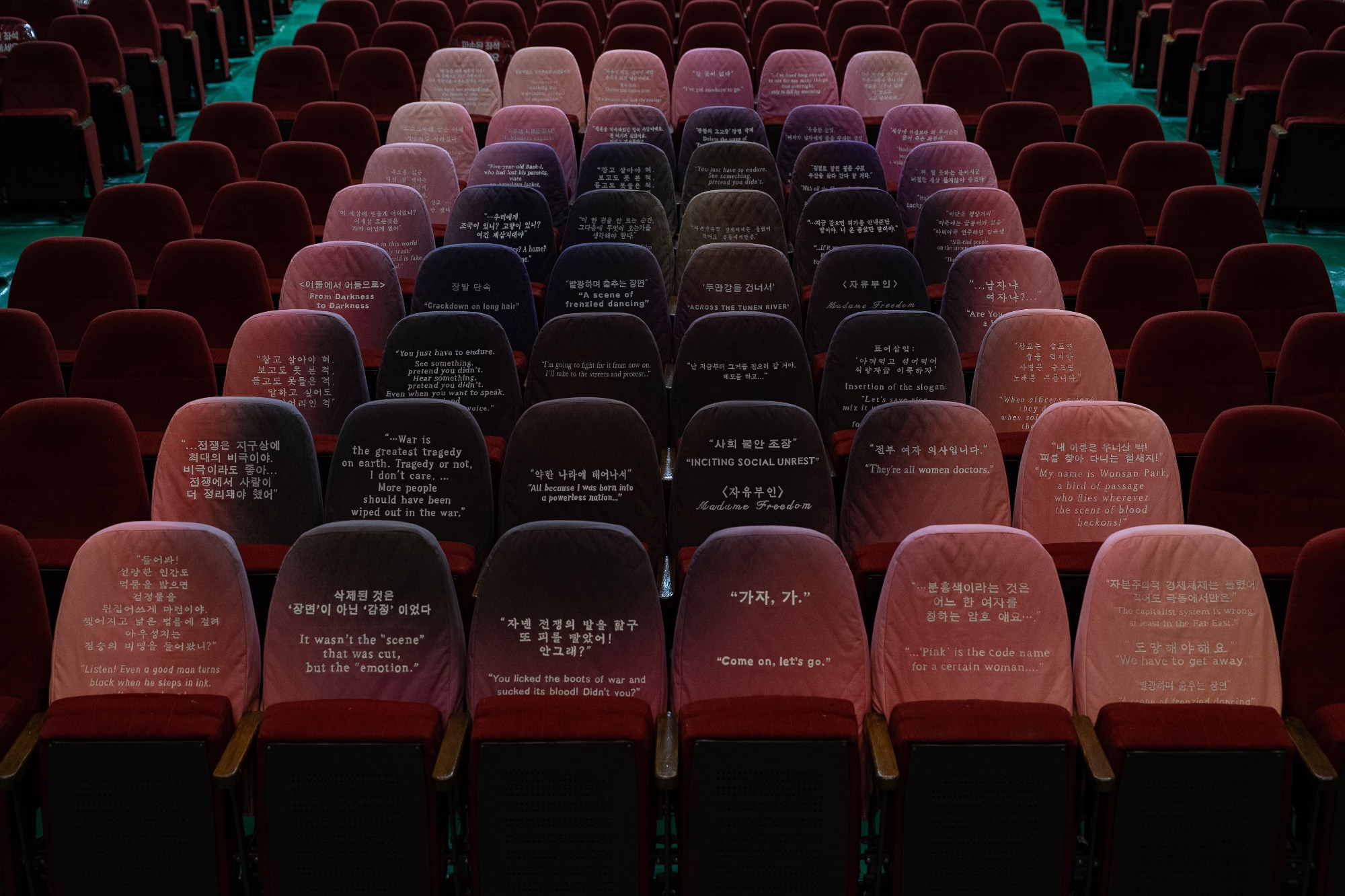
‘Delete the scene of frenzied dancing’, 2026.
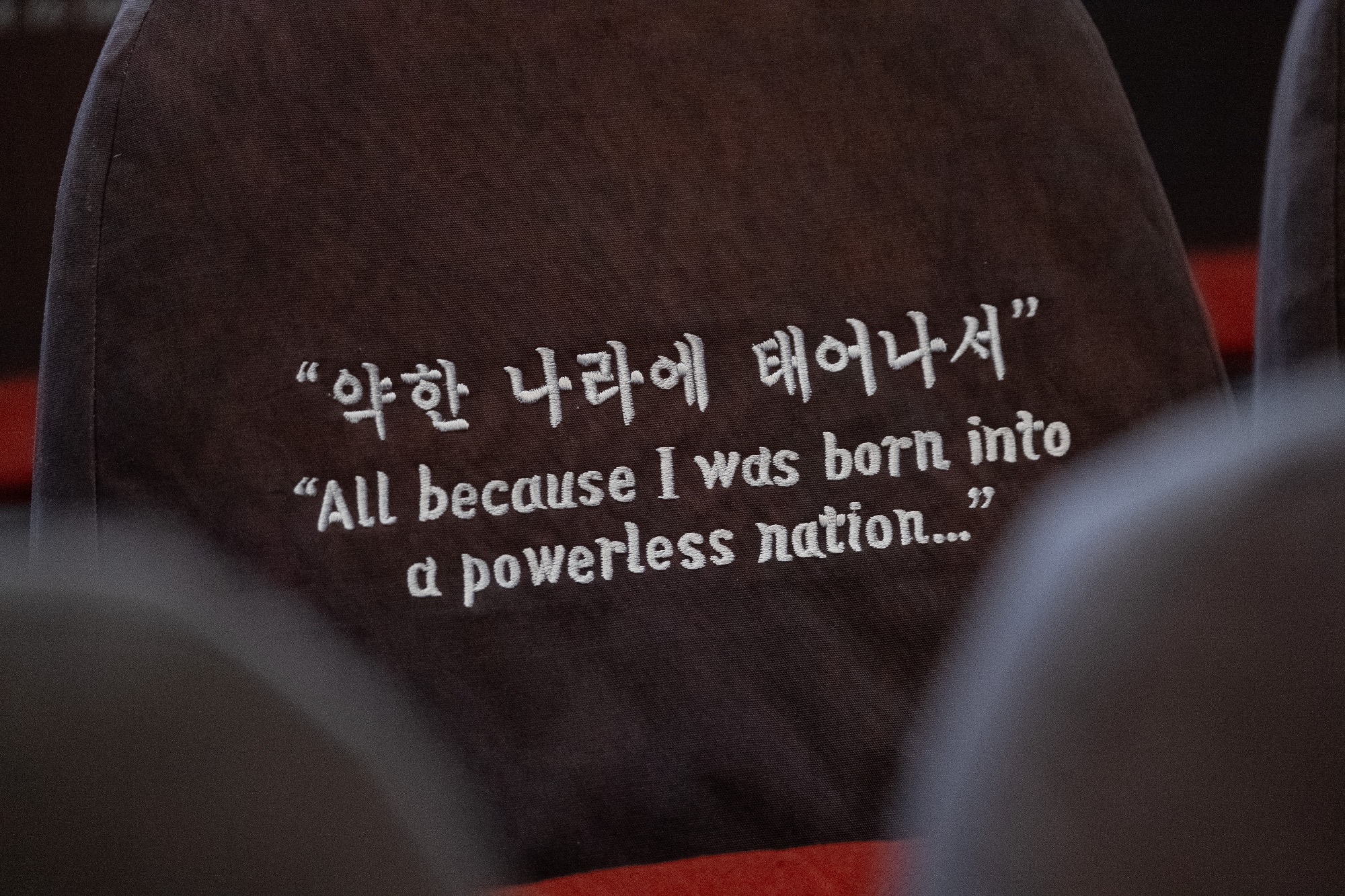
Dialogue and stage directions deleted or altered by censorship, quotations, embroidery with rayon thread, acrylic paint, dye, and print on Oxford cotton muslin.
Through the Japanese colonial period, liberation, the Korean War, modernisation, and urbanisation, the Gwangju Theatre has endured censorship and control that cut into language, withheld images, and forced emotions into silence. It became a place where what could not be openly expressed gathered quietly, remaining as the concealed collective memory of an era. To Ham, symbolically, it is a body that has survived forms of violence across successive eras, while carrying the presence of what was erased. Over time, this body has been struck, pressed down, and set into motion again as blood returned and recovery began. Yet, like any wounded body, it never fully returns to its original state. A wound does not disappear; it remains in another form. The traces that remain within the Gwangju Theatre are represented through the physical image of a ‘bruise’. In this site-specific installation, the work attempts to reimagine an ‘anatomy of wounds’ across the body of the theatre. On the selected seats, censorship documents, deleted lines of dialogue, film titles, and the durations of missing footage are embroidered, suggesting that what was erased continues to reside within the body. In Ham’s work, the Gwangju Theatre is less a venue that preserves history than a body in which the passage of time remains materially present. Like an old bruise, the precise moment of injury may fade, but the sensation that something has passed through this place does not easily disappear.