
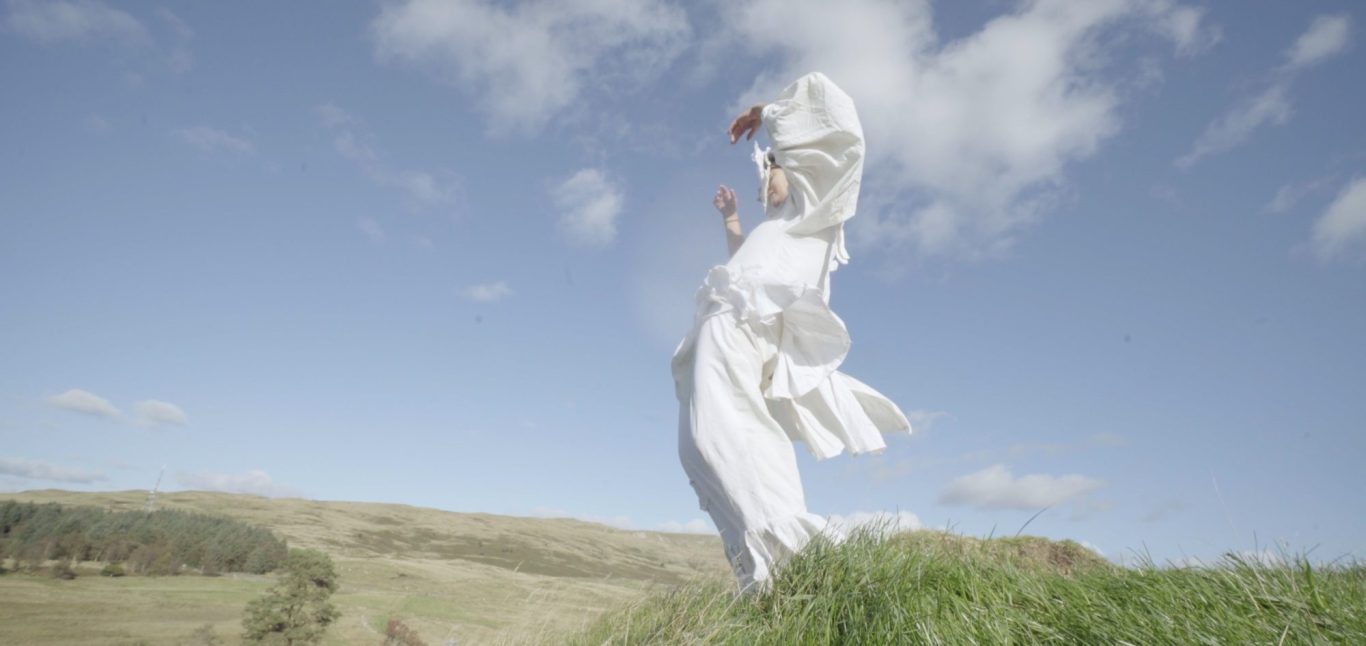
Blodeuwedd, 2025. Site-specific performance
Anushiye Yarnell
Different myths arise from different cultures; they travel and evolve through time and space. As a second-generation migrant from Sri Lanka, Anushiye Yarnell finds this land to be both home and foreign. Nurtured by Welsh folklore from a young age, her imagination enabled her to feel a sense of belonging anywhere. In her performance work Blodeuwedd, Yarnell reinterprets a Welsh tales through her interdisciplinary performance, and connects fantasy and our everyday reality. As part of the Mabinogion – a collection of the earliest Welsh oral stories that compiled in the 12th–13th centuries, the story of Blodeuwedd tells of a hybrid creature, born to be beautiful and pure – a flower-masked human in appearance. Following her betrayal of her husband, she was punished by being transformed into an owl, a symbol of exile.
The sites in Wales chosen to stage this performance were carefully selected. These multiple locations conceived as one single theatrical site, include Dyffryn Ardudwy, one of the locations referenced in Blodeuwedd’s story, featuring a pair of Neolithic tombs; Cors y Gedol, the nearby remains of the burial chamber surrounded by hawthorn trees; and Tomen y Mur – a first-century Raman fort in the romantic mountainous region of Snowdonia, where Blodeuwedd is said to have lived. The tombs at those primary sites appear like little houses – a home for two lovers – ultimately leading to a fatal destiny, or perhaps, a portal to other unknown realms.
The film of performance is presented as a triptych – popular visual format for altar paintings from the Middle Ages onwards. The artist is dressed in white, wearing the flowery mask that simultaneously reveals and conceals the different aspects of Blodeuwedd. The specially tailored costume highlights the hybridity of the being and its potential of reincarnation and transformation as predominant features of mythical creatures across both Western and Eastern cultural worlds. In the film, the feminine archetype originating from Welsh mythology is extended into a universal figure – one who seems to be hesitant or anxious, unwilling or determined, performing human dilemmas of freedom and demarcation, desire and temperance, innocence and sensuality. In addition to the bodily movements that respond to the story, the female voice in the background, reading the poetic verses adds an indispensable dimension to the visual narrative. These artistic reflections are expressed through her dreamlike approach, and delivered in an intimate manner, proposing personal connection with each individual in the audience. As she whispers while dancing around a large hawthorn tree:
A woman unborn…
Let fall one dewdrop tear…
Preludes mere desire, mere survival, mere loss.
The tiny welling of her soul…
A crystal seeds itself,
A liquid jewel,
Spirit? Soul?
With its white blossoms traditionally seen as symbols of purity and renewal, the hawthorn tree is particularly meaningful in echoing this myth, its sharp thorns reminding us of the pain after betrayal, and of beauty that can turn perilous. Rooted in the Welsh context, Yarnell revisits the notions of romance, love and morality through the interaction between body and site, exploring something sorrowful yet precious, illusory yet truthful, and local yet internationally recognisable.